Is our Current Approach to Covid-19 the Future of Education?

Covid-19 has become one of the largest global pandemics since the H1N1 influenza outbreak in 2009 and has completely changed our ways of living. The way we’re living currently feels a lot like a dystopian world in a film or book however is it possible that some aspects of this are the future for us? With technology developing at a rapid pace, it’s allowed us to operate just fine from home and so I’ve naturally been thinking that in the far future, how possible is it that this approach will be our way of life. I was thinking about this with regards to learning, working and communication and that I could see a world where learning and shopping is all done online along with meetings and work being done from home where possible. As a result, the positives from the current self-isolation situation with the environment cleaning up worldwide and pollution virtually disappearing would continue. Specifically, dolphins are starting to appear in the waters of Italy again during the current lockdown situation and additionally air pollution in china is clearing up a lot since no one has been travelling via car or public transport.


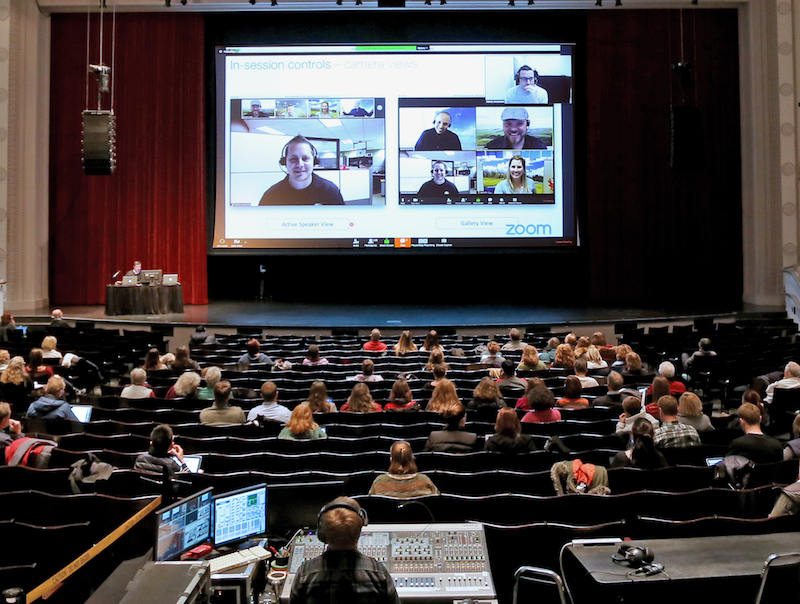
One key way among many others in which our lives have changed during Covid-19 is through education with all learning being virtual and done through apps like Zoom, Kast and Skype. It’s really incredible to think about how far technology has come to allow for this to be a possibility. This begs the question of whether people in the future will resort to online learning and education as an alternative to save on travel and also being able to attend colleges and universities from around the world. With the current situation where lectures, lessons, exams, essays and assignments are all done and submitted online anyway, the online education infrastructure is developing at a rapid pace which would allow for several people to be able to learn from home using online resources. Even if this was just PowerPoints, recorded lessons and lectures posted to online sites like Blackboard, this could help students drastically in the future with regards to online learning without having to travel especially if they would normally struggle to make it to school each day. Whilst there are a lot of affordances to an online education system, there are still a lot of constraints with this. For example, some students wouldn’t learn certain key skills that most young people learn from physically going to school like time management, motivation, communication along with many others. Additionally, a lot of important friendships are developed during school and with an online education system, this would be a lot harder for children to develop long lasting bonds with other students if they couldn’t spend free time with each other in person. Also, students may lack motivation at home to wake up for classes or could get more easily distracted from things around them as the learning environment just isn’t there. Personally, I could see an education system in the future where the learning environment is there however some students do study at home taking the same course with recorded resources online if it benefits them.

Despite all these changes to learning and work being done online, one thing I don’t see moving completely online is social events and gatherings, I mean how can it? The essence of going out with friends or visiting family in person will never truly be replaced as it’s spending time with others in person that pretty much stops us going crazy. In fact, after the situation returns to normal, we’re definitely going to see social gatherings almost everywhere and a surge of people out and about.

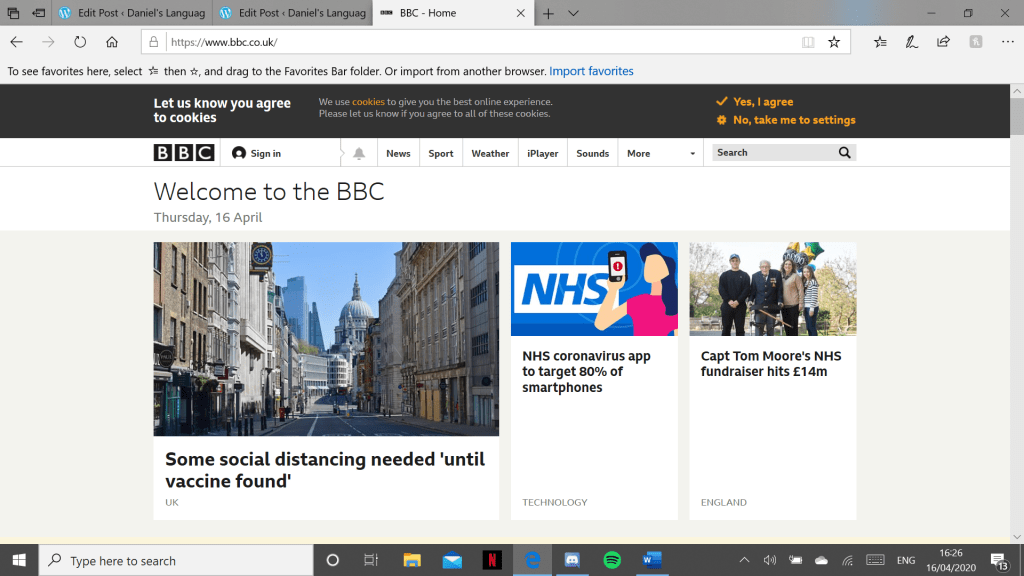
With all these new developments in our ways of life, it’s not to deter from the fact that the Corona virus is one of the most devastating situations to have happened to us in recent years putting several people into critical condition requiring intensive care and sending many people into recession with their services not being required during lockdown. This is why it’s adamant that we keep up with social distancing to help out our NHS workers keeping us alive. Ultimately, I don’t see these changes to learning happening anytime soon but it’s definitely something that’s developing at a rapid pace due to our current situation which is why I assume the infrastructure will be at a point to support an online education system in the future. If you want to read more into this idea, there’s an article from the BBC linked blow relating to this same topic.

https://www.bbc.com/future/article/20200331-covid-19-how-will-the-coronavirus-change-the-world

Netflix and Algorithms

Netflix, over the past decade, has quickly become the most popular tv and film streaming services on the internet (with around 139 million subscribers as of February 2020) . Almost anyone you speak with will at least know of it and in most cases use it on a regular basis, but what makes it so great and why is it still so relevant to this day?

Well firstly, with Netflix users spending around 1 billion hours watching movies weekly, it’s a great conversation starter. Since more or less everyone you speak to watching Netflix, it’s a great thing to talk about and a common ground which people can relate to. In this regard, Netflix definitely makes us more social however on the other hand, Netflix also arguably ruins social gatherings or family time. This is because since anyone can simply watch Netflix on their laptop, tablet or phone and is much easier for people to sit in bed and watch their favourite show rather than going downstairs and watching TV. In some cases, people would rather stay inside than go out with friends primarily because of Netflix and that we have all the entertainment we need indoors which is another example of Netflix making us less social.

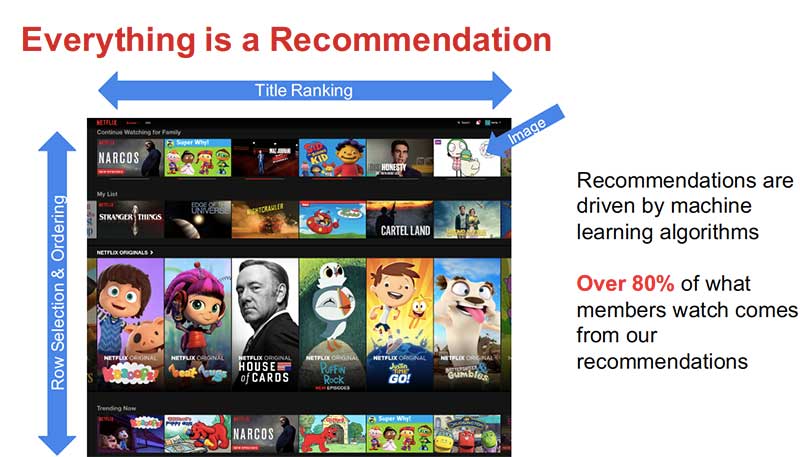
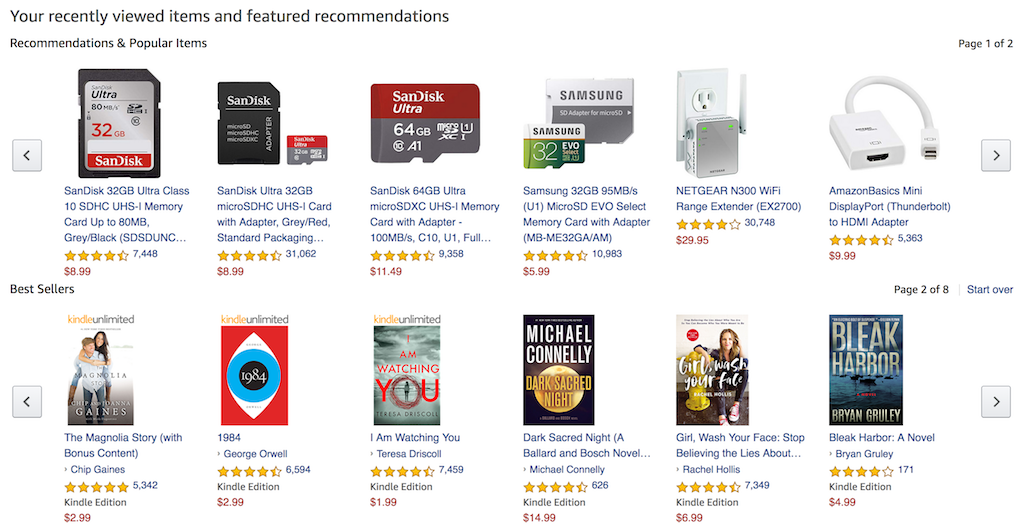
Netflix also provides us a lot more freedom with regards to what we want to watch than ordinary TV however this leads to the question of whether we are really in control of what we watch. This is where algorithms come into play. From the second we log onto Netflix, we are presented with several recommended shows that theoretically we should like. Another method Netflix use is the auto-play functionality seen on platforms like YouTube where Netflix will automatically play the next episode of the series you’re watching. Recommendation algorithms effectively see what we’ve spent the most time watching previously and recommend us similar shows based off this information. Therefore, anything we watch determines what we watch in the future.

See the source image
Examples of Netflix’s recommendation algorithm

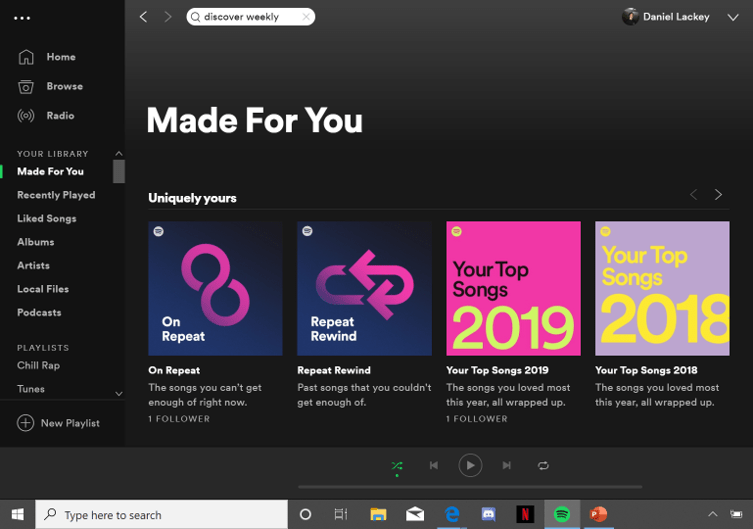
Arguably, algorithms are good since they are objective and unbias on the surface however algorithms are made by people who aren’t objective. Often, we even go as far as to change our behaviour in order to trick the algorithm to give us something different. For example, with Netflix, users might just watch a variety of shows contrary to what they usually watch or even create a new user where they would watch different shows just to get a series of new recommendations. Netflix isn’t the only platform to use recommendation algorithms however. Spotify also uses an algorithm in order to recommend the user lots of songs they might like based on what they listen to regularly, the genre of a certain playlist or even what their friends are listening to. For example, if certain type of music keeps being recommended but you don’t want to keep listening/get recommended this type of music, people may sometimes listen to other artists/genres in order to trick and switch up the algorithm. This can work for almost any websites which use recommendation algorithms like Amazon, YouTube or even Facebook.

Platforms like Netflix and many others ultimately use these algorithms in order to keep the viewers on the app for as long as possible. Using these algorithms to recommend the viewer another series they might like as soon as the series they’re currently watching finishes retains the flow of viewing, increases watch time and ultimately encourages the user to stay subscribed.

Can Emoji’s Really be Considered a Language?

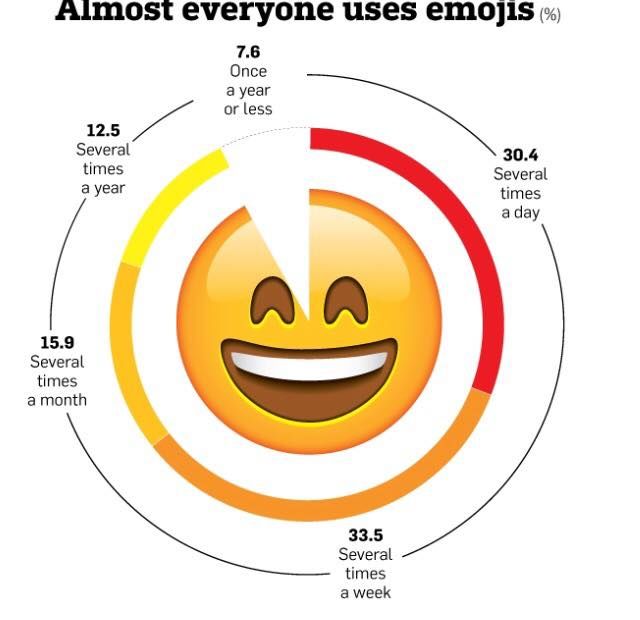
Emoji’s (short for emoticons) have become some of the most used online characters in the past decade. In fact, the ‘Crying Laughing’ face was the ‘Oxford’s word of the year’ in 2015, which really emphasises how much Emoji’s have taken over texting and writing online, especially on socal media. I mean, it’s not even a word which goes to show just how popular they are with hundreds of millions of emoji users each day. Due to the amount that people use emoji’s it’s argued by some people that emoji’s are a language in it’s own way, but why exactly is this and why is it so popular?

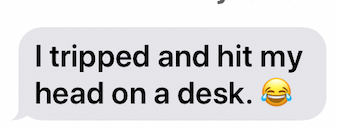
Well, the main reason, besides the fact that everyone else does it and a fear of standing out from the crowd, is because in face to face conversation, aspects like facial expressions, tone of voice and body language portray a ton of information whereas over message, these aspects are absent. This is where emojis come in since they allow us to portray a sort of virtual facial expression alongside our message. This can quite literally alter the whole context of a message.

A couple of examples of this is seen above whereby the actual context of the sentence is serious however the emoji suggests that it’s not serious and sets a more joyful tone to the conversation. “I tripped and hit my head on a desk” by itself leaves the recipient wondering whether the tone of the conversation is happy and jovial or more serious. The use of the crying laughing emoji tells the person that it’s a joke which supports the intended meaning of the conversation. Furthermore, looking at the sentence “He almost died”, if there was no emoji here it would be perceived as serious however despite the use of an emoji, the morbidity of the topic is still very prominent which suggests that the emoji is used more to hedge the morbidity of the sentence.

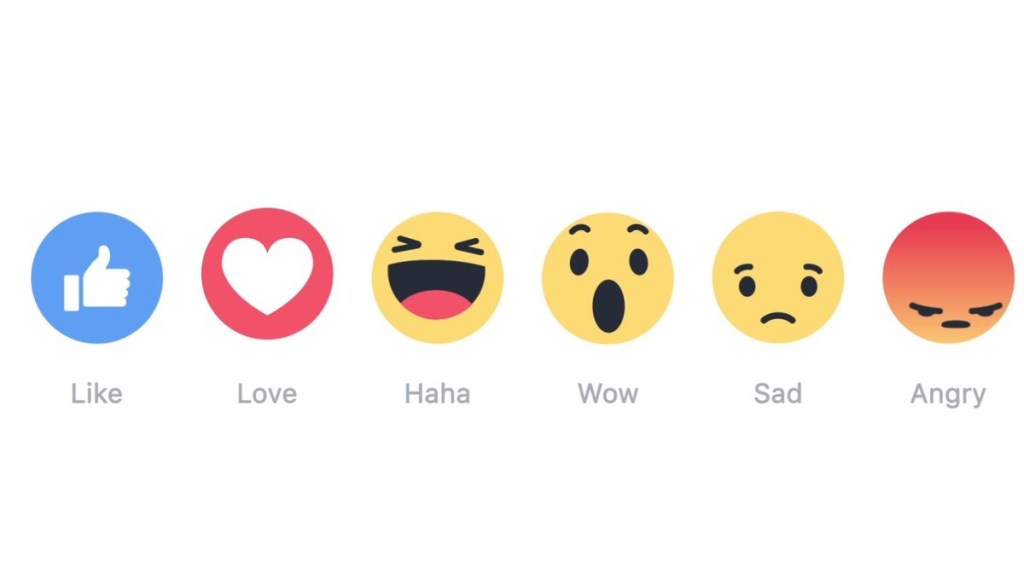
With regards to emoji usage on social media as opposed to texting, sites including Facebook, Twitter and Instagram encourage emoji usage with the ability to react to certain posts. In a sense, when scrolling through posts and thanks to feeds, people have become a lot lazier and might not feel the need to interact with posts, especially things like news articles that pop up on our facebook feeds however with the addition of reactions to these posts, it takes one click to like, love or laugh at something along with a variety of other ‘reactions. Even on a laptop or computer where there’s no emoji keyboard, people can still react to posts with these emoji’s (seen below) which also encourages emoji usage.

Usage of emoji’s definitely varies, dependant on the situation and the formality of the conversation. For instance, if one spoke with their manager over online messaging, emojis could be considered inappropriate and informal. When speaking with friends or even family on the other hand, most people often use emoji’s for the reasons above, but if the conversation topic is serious or if there’s conflict happening, emoji’s wouldn’t really be considered appropriate.

Ultimately, this begs the question of whether emoji’s by themselves can even be considered a language. Personally I believe that, even though some of the affordances of emoji’s like the fact that they convey a wide variety of messages and act as a form of virtual facial expression, they’re more useful to support the languages we already use and help provide a lot more context and intended meaning to sentences. Even though emojis are a great way to help us express ourselves through screens to others, there are also a variety of constraints. For example, if we react to messages with just emojis, it can be considered unsociable in the fact that this is lazy and someone wouldn’t really react with just a facial expression in real life. Additionally, emojis can cause miscommunication as the meaning of them can be interpreted differently from one person to another. Despite this, the popularity of emoji’s is only on the increase as online messaging and texting is become more and more prominent in the coming years.

Is the Internet our Closest Friend?

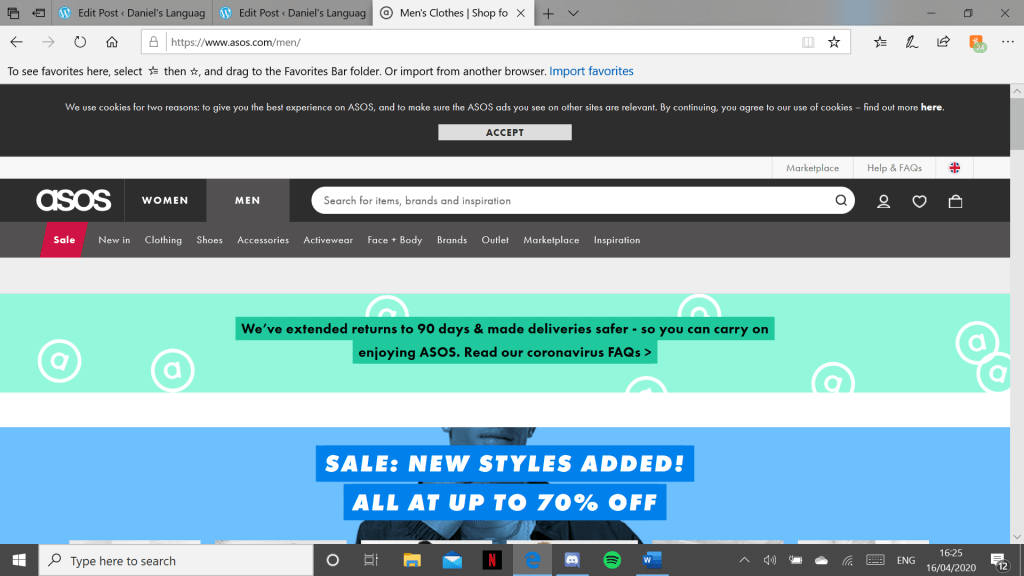
The internet is always taking information from us; it does this through cookies (and I don’t mean the delicious kind). Effectively, cookies are small pieces of data which websites take such as recording the user’s browsing activity. This is done in order to then sell the information to advertisers which allows google and other websites to send us personalized advertisements. I mean, I’m not going to buy pet food any time soon if I don’t own a pet however if I want some new shoes and they track my browsing activity, they would easily find this out and put relevant advertisements all over websites I allowed cookies for. Yep, we give the websites permission to sell our data however this is done through a pop up. Often it looks like this and is found at the top of the website:

Linking to this, the YouTuber “Mitchollow” made a very interesting video called “Is Google always listening: Live Test” about whether or not google is really ‘listening’ to our conversations. In this video, he talks about dog toys for around 2 minutes straight and afterwards heads onto a variety of websites to see if he’s advertised dog food.

URL: https://www.youtube.com/watch?v=zBnDWSvaQ1I&t=15s

The results from the video were shocking to say the least. The majority of websites he visited showed advertisements of dog toys after speaking about the topic. This isn’t to say destroy any microphones on your laptop, but it really shows just how easily these websites get a hold of your data. There are several other examples of websites using our data such as advertisements coming up for items you’ve recently searched, shopped for or even bought or most commonly the recommender system on places like amazon, the explore page on Instagram, YouTube suggested videos, recommended shows or films on Netflix or even recommended Spotify playlists.

These are only a few examples of how the websites do this but almost every website or platform takes our data one way or another and once the internet has our data, it almost traps us in this bubble of our own preferred internet where it displays us the information and adverts that it thinks we want to see. This is called filtering. All filters are biased in some way or another since they create bubbles of information based on who we know, what we like and how we already think. Filters are ideal since we only see things we want to but they can also distort knowledge. In fact, due to filters, Google’s algorithm can often result in fake news. This is because it decides whether the information is popular and whether they think you’ll like it regardless of whether it’s true or not. This is far from trustworthy to say the least. If we want to fact check something, cross referencing other websites can be unreliable since those websites have also been pushed forward based on the algorithm and what Google thinks we want to hear. Ultimately, we decide information based on cognitive biases which isn’t necessarily a bad thing because having general opinions based on what’s good and what’s bad is important but when websites which we rely on for information such as Google and Facebook start showing us information that it thinks we want to see rather than the truth, then it can become a problem.

Almost all information we are presented with digitally is bias which we see through a filter. Just because information is biased doesn’t mean it’s wrong however it makes it harder to distinguish what’s real and what we want to believe is real. There are several different concepts that fall under a cognitive bias. Confirmation bias which is where the information supports what we already believe, recency bias where we show bias towards the last thing we heard, availability heuristic where we’re most likely to believe the information most readily available to us like things on the top of our news feed and lastly loss aversion bias (FOMO) which is the fear of missing out on certain information we consider important if it has a lot of currency in our social groups. This refers to the idea that we’re more likely to believe certain information since we don’t want to miss out on being accepted by our group.

Ultimately, the internet sucks up information from us. The more things we look up over time, the more information we are giving to the internet. In a sense, we are the information that drives the economy of the internet. The more we give, the more they sell to advertisers. It all sounds like scary stuff but it really goes to show how important keeping our information safe is nowadays. Arguably, we are subconsciously becoming closer with the internet than we really would like.

Multilingualism and Social Media

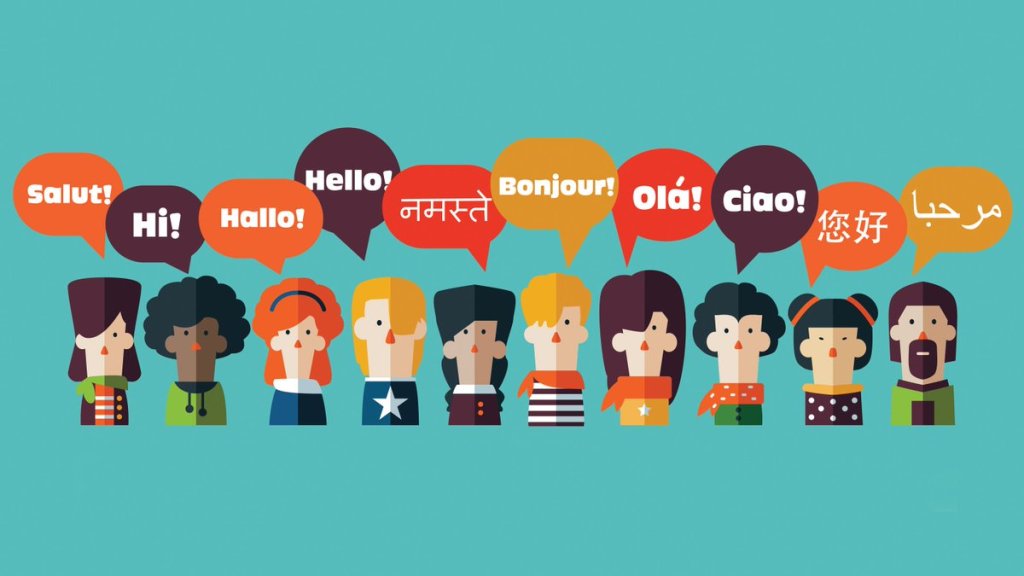
One thing I’ve always looked over when scrolling through social media is the amount of different languages online. This is not something that everyone considers, especially since every piece of media we consume is in English. If we open any social media platform, our feeds are usually all in English and so that begs the question as to where Multilingualism come in to things with regards to social media. I was scrolling through Instagram earlier today and I realised that celebrities or accounts with followers from across the world often have a variety of comments under their photos in either the followers’ native languages, emoji’s or English. I then realised that this is a good example of where a large amount of multilingualism takes place. It’s very interesting seeing the wide variety of languages on social media and also made me think if there’s such thing as a dominant language.

These are pictures taken from Cristiano Ronaldo’s Instagram feed. Since he’s a famous celebrity adored by fans all around the world, he’s a good example of where you can see multilingualism on the internet. One immediate thing to notice apart from the aesthetic photos, is the array of languages in the comments. Despite the variety of people from around the world, why is it that English is still used by international fans and even by Ronaldo himself even though he’s from Portugal. For example, in the comments of the first photo, the user ‘luthvi_adrian26’ uses the phrase “Cristiano, I’m your fans. Please Follback”, which suggests that some fans use English as it’s the most common and global language of communication even though their not fluent in it. Additionally, this could also be because Ronaldo himself writes his captions in English and so the fans are using it to build a sense of rapport with him by using the same language. For example, in the first post above, Ronaldo writes “All Good. Thanks for your support”. These concepts support the idea of English as the global language of communication however why is this the case?

Fishman actually regarded English as a “killer language” since ‘More than 80% of the content posted on the internet is in English’ and that ‘its expansive reach is undeniable and, for the time being, unstoppable’. Fishman made this observation in 1998 when the internet was starting to develop into what it is today. Therefore, in the past couple of decades it’s easily debatable that the internet welcomes much more multilingualism than back in 1998. For example, Crystal also makes the statement that ‘Not only does it [the web] offer a home to all linguistic styles within a language; it offers a home to all languages’ which supports the concept of the internet as a home for multilingualism with users from across the world. On top of this, English is considered the language of international communication, media, entertainment and the internet. It’s the official language of 53 countries and spoken by around 400 million people across the globe. Not only this but many of the world’s top films, books and music are published and produced in English. Furthermore, an estimated 565 million people use the internet every day, and an estimated 52 percent of the world’s most visited websites are displayed in the English language. The above reasons are ultimately why English is so dominant on the internet and in the world.

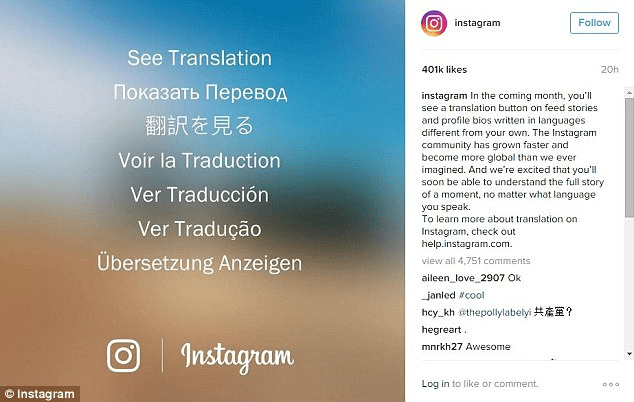
Despite this, not everyone feels obligated to use it suggested by the very wide diversity of different languages we see all over social media on Instagram, YouTube, Twitter etc… Additionally, we have lots of tools to help use communicate with others who speak different languages. On YouTube for example, there’s aspects like closed captions and on Instagram, the ‘See Translation’ text under posts which auto-translates the caption and comments into English or the language chosen by the user. Even on Wikipedia, there’s the option to change the language of the site. Features likes these really encourage multilingualism on the internet and helps us understand and communicate with others from around the world.

Design a site like this with WordPress.com
Get started